Farshi Shalwar Trend in the UK (2026): Heritage Fashion for Modern Pakistani Women
- January 17, 2026
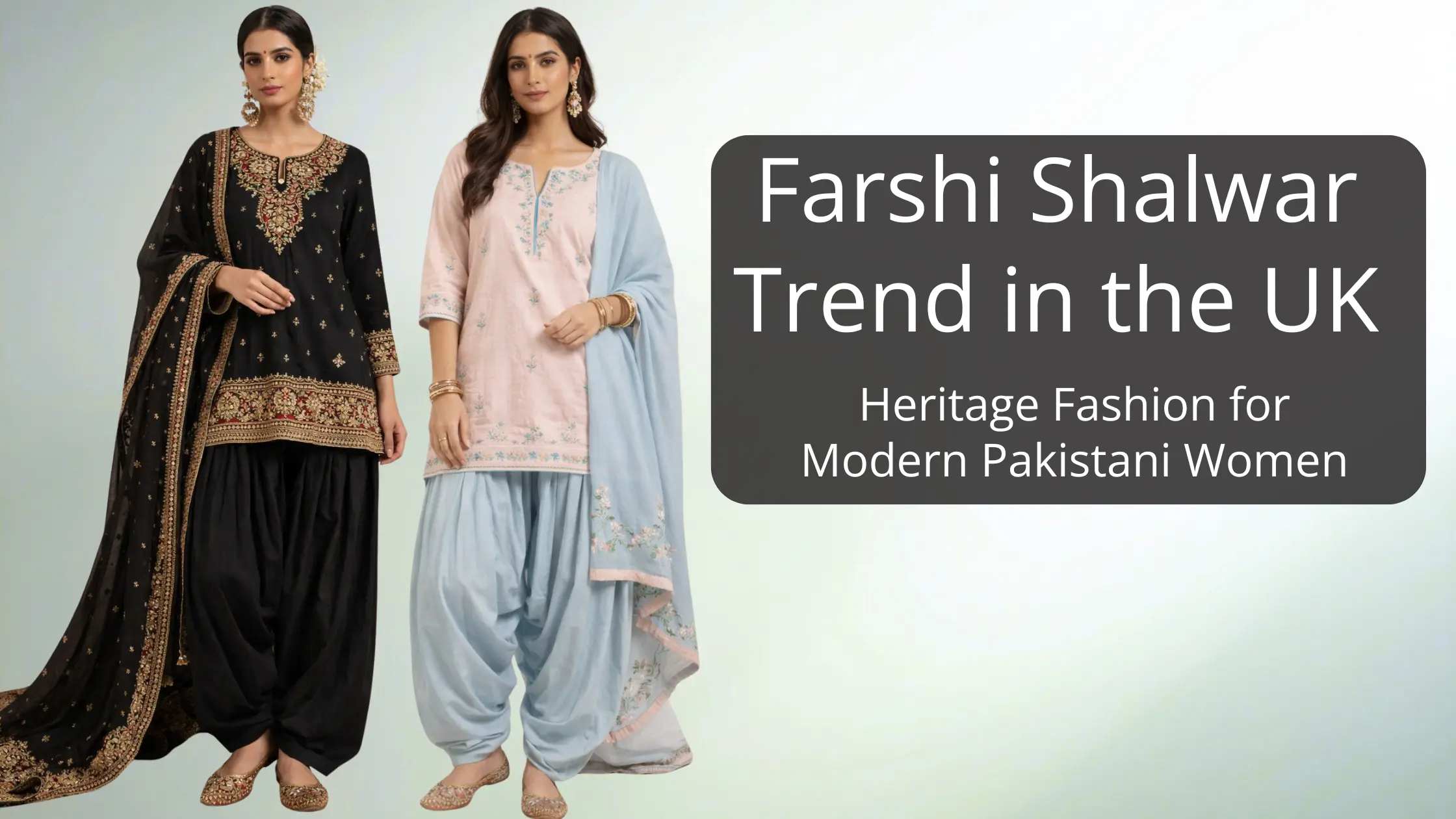
Farshi Shalwar is a wide and long trouser worn by women. It spreads on the floor and was first seen in royal courts during the Mughal period. Today in 2026, it is back in fashion, especially among Pakistani women living in the UK. People wear it for Eid, weddings, and family gatherings.
You’ll see it in London, Birmingham, and other UK cities. Many women find it easy to move in and proud to wear. The style is now part of everyday clothes and special events.
H2: What is Farshi Shalwar? Origin, Design & Cultural Meaning
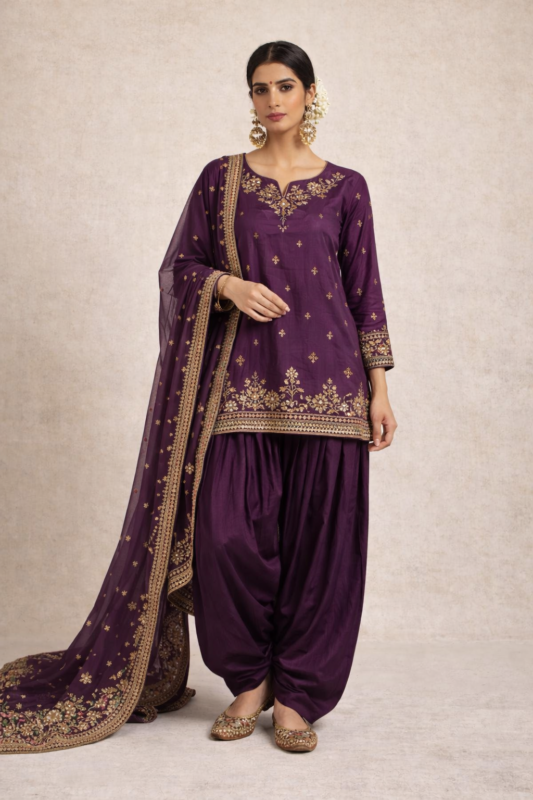
Farshi Shalwar is a floor-length trouser that spreads while walking. Women wear it with a long shirt and a dupatta. The style started in royal courts during the Mughal period in Oudh. Noble women wore it to show status, wealth, and grace. This historical design is now finding new life among British Pakistani women in cities like London and Bradford.
The word “Farshi” means “of the floor” in Urdu and Persian. The design uses 9 to 15 yards of fabric and has hand embroidery with zari and thread work. This style also became popular in Punjab and Hyderabad.
Over time, women in Pakistan and India wore lighter versions at weddings and events. Now in the UK, the same design is coming back in new fabrics and fits. British Pakistani women wear it to connect with culture and feel proud of their roots.
Why Farshi Shalwar is Trending in the UK in 2026
British Pakistani women are bringing Farshi Shalwar back into fashion. They wear it for Eid, weddings, and cultural events. The trend started growing again through TikTok and Instagram. Short video posts about Farshi Shalwar have millions of combined views on Instagram and YouTube, showing strong public interest in this style. For example, some reels tagged with the Farshi Shalwar trend have been shared widely across Eid fashion content.
Many women in the UK saw videos of Pakistani celebrities and influencers wearing Farshi Shalwars. These videos showed how to style it with modern tops, light makeup, and simple jewelry. Fashion brands also followed this trend and added Farshi Shalwar to their Eid and wedding collections. The loose fit and full length make it easy to wear at crowded events.
It gives modesty, comfort, and a strong cultural look. Women across London, Manchester, and Bradford are choosing it more than slim trousers or jeans for desi functions. This trend shows a mix of old tradition and new style.
Popular designers like Sadaf Kanwal and Maria B helped bring this trend back through Eid collections and influencer campaigns. Most Farshi Shalwar designs are made for women, though some stylists now explore unisex styling. Social media posts with high views and shares helped this outfit reach more people outside the South Asian community.
Where to Find Farshi Shalwar in the UK
Farshi Shalwar is available in the UK through online stores and South Asian fashion boutiques. Shoppers usually look for brands like Afrozeh, Maryum & Maria, Ayesha Somaya, and Zona Shaham. These brands offer designs with heavy or light embroidery, in fabrics like silk, organza, and cotton.
The Farshi Shalwar trend in the UK for Pakistani women has grown so much that buyers often first search for designs online before seeking stitching options locally. This pattern shows how demand has shifted from casual browsing to serious purchase interest.
Some UK-based websites such as Diya Online and Shadi Dress often stock Farshi-style suits. Many buyers also follow brand pages on Instagram for updates on Eid collections and sales. Local boutiques in places like East London and Birmingham sometimes carry stitched or custom-size options.
At Perfect Designers, while we do not sell Farshi Shalwar as a ready-made item, we do offer stitching services. If you buy an unstitched suit from any Pakistani brand, we can stitch it into a Farshi Shalwar Kameez before dispatch. This way, you can follow the trend and get the style you want without searching multiple shops.
Farshi Shalwar Styling Guide and Best Fabrics for Your Occasions
When styled with the right balance of fabric, colour, and accessories, Farshi Shalwar becomes more than a trend. It becomes a timeless outfit that blends heritage with modern practicality, making it a confident choice for UK weather, events, and everyday elegance.
What to Wear It With
Most women wear Farshi Shalwar with a long shirt and dupatta. Some prefer a short kurti or a plain modern top for a fusion look.
Which Colours Work Best
Pastel colours suit daytime events like brunches and Mehndi. Deep tones like navy, maroon, and emerald work better for evening functions.
Best Fabrics for Farshi Shalwar
Cotton and lawn work well for summer or daytime wear. Velvet, georgette, and raw silk are better for formal events like weddings or receptions. Heavier fabrics give more fall and volume, which suits the Farshi look.
Embroidery and Design
Light embroidery fits casual or semi-formal wear. For weddings or receptions, women choose zari, mirror work, or hand embroidery.
Footwear That Matches
Flat khussas and embroidered juttis are common choices. Some women also wear block heels or simple sandals for added comfort.
Accessories and Makeup
Simple earrings, bangles, and natural makeup help keep the focus on the outfit. A bold lip or kohl eyes can add drama for formal events.
Dressing for the UK Weather
In colder months, women add a shawl or a fitted jacket. Layering helps keep the look stylish and practical for UK seasons.
When styled with the right balance of fabric, colour, and accessories, Farshi Shalwar becomes more than a trend. It becomes a timeless outfit that blends heritage with modern practicality, making it a confident choice for UK weather, events, and everyday elegance.
Farshi Shalwar vs Gharara vs Sharara: What’s the Difference?
Farshi Shalwar, Gharara, and Sharara are three traditional outfits often worn at South Asian events. Many people confuse them, but they are different in shape, cut, and purpose. Here’s how they compare in simple words.
Farshi Shalwar
Farshi Shalwar is a wide, floor-length trouser worn with a long shirt and dupatta. It uses a lot of fabric and spreads on the ground. It started in the Mughal period and is known for its royal and flowing look. Women wear it for formal events like weddings or Eid.
It gives a more dramatic and elegant appearance compared to other styles.
Gharara
Gharara is a fitted trouser that flares out sharply at the knees. It is joined with a thick seam and usually worn with a short or mid-length kurti. It is common in North India and Pakistan and often worn at weddings or festive events.
It offers a structured and bold look with a traditional cut.
Sharara
Sharara is a wide-legged pant that flares from the waist down, like a skirt. It has no joint or cut at the knee. It is worn with a long kurta and dupatta. Shararas are often chosen for Mehndi functions or casual festive wear.
Sharara suits women who want a loose, flowy feel without too much fabric weight.
Each style has its own fit, flare, and occasion use. Farshi Shalwar stands out for its volume, history, and strong visual appeal.
FAQs
Is Farshi Shalwar trending in the UK?
Yes. Farshi Shalwar is trending in the UK, especially among British Pakistani women. It is popular for Eid, weddings, and cultural events.
Where can I find Farshi Shalwar in the UK?
You can find Farshi Shalwar styles on UK-based websites like Diya Online and Shadi Dress. Some boutiques in London and Birmingham also carry them.
Can I turn an unstitched suit into a Farshi Shalwar?
Yes. If you buy an unstitched suit, our tailoring service can stitch it into a Farshi Shalwar Kameez before dispatch.
What is the best fabric for a Farshi Shalwar?
Cotton works well for daytime and summer wear. Velvet, organza, and silk are better suited for weddings or evening functions.
What makes Farshi Shalwar different from Sharara or Gharara?
Farshi Shalwar is floor-length and spreads on the ground. Gharara flares from the knee, while Sharara flares from the waist without a joint.
Which Salwar is trending now in the UK?
Farshi Shalwar is one of the most trending styles in 2026. It is chosen more often than straight pants or churidars for weddings and festive events.
Are Farshi Shalwars comfortable?
Yes. Farshi Shalwars are loose, full-length, and easy to move in. The wide shape and soft fabrics make them comfortable for long events.
What occasions are best for wearing Farshi Shalwar?
Women wear Farshi Shalwar for Eid, weddings, family parties, and cultural events. It works well for both formal and semi-formal settings.
Farshi Shalwar in the UK: A Lasting Trend for Pakistani Women
Farshi Shalwar has made a strong return in the UK, especially among Pakistani women who want to stay close to their roots. The style fits well with modern fashion while keeping its old charm. It works for weddings, Eid, and family events. UK-based women now wear it with pride, comfort, and style.
This growing trend shows how Farshi Shalwar is more than just clothing. It connects generations, keeps culture alive, and brings tradition into everyday life.
Get Your Farshi Shalwar Stitched the Right Way
Bought an unstitched Pakistani suit? We can tailor it into a Farshi Shalwar Kameez with proper fall, length, and finish, ready for UK events.